Why Do Pavers Sink? Common Causes and How Professional Repair Fixes Them
Sunken pavers are one of the most common problems homeowners notice with patios, walkways, driveways, and other hardscape surfaces. What may begin as a small low spot can quickly become a larger issue that affects drainage, appearance, and even safety.
At Amazing Paver, we regularly see pavers settle because of problems beneath the surface rather than with the pavers themselves. In many cases, the original materials can be lifted, the underlying issue corrected, and the same pavers reinstalled.
Understanding why pavers sink is the first step toward choosing the right repair.
What Causes Pavers to Sink?
Pavers typically sink when the base beneath them loses stability. A properly installed paver surface depends on compacted base material, bedding sand, edge restraint, and effective drainage working together.
When one of these components fails, the pavers above it may begin to move.
Some of the most common causes include:
- Improperly compacted base material
- Soil settlement
- Water erosion
- Poor drainage
- Failed edging
- Heavy traffic or repeated weight
- Washout beneath the pavers
- Joint sand loss
Homeowners dealing with uneven areas can learn more about our professional paver repair services and the restoration process we use to correct these problems.
Poor Base Preparation Can Lead to Settlement
One of the biggest causes of sinking pavers is an unstable base.
Pavers are not installed directly on ordinary soil. They depend on layers of compacted aggregate and bedding material that help distribute weight across the surface.
If the base was not installed deeply enough, compacted properly, or prepared for local soil conditions, sections of the paved area may begin to settle over time.
Why Base Compaction Matters
Compaction removes air pockets from the base material and helps create a stable foundation.
Without sufficient compaction, the aggregate beneath the pavers can shift when exposed to rain, freeze-and-thaw cycles, foot traffic, vehicles, or changes in the soil below.
Once the base drops, the pavers follow.
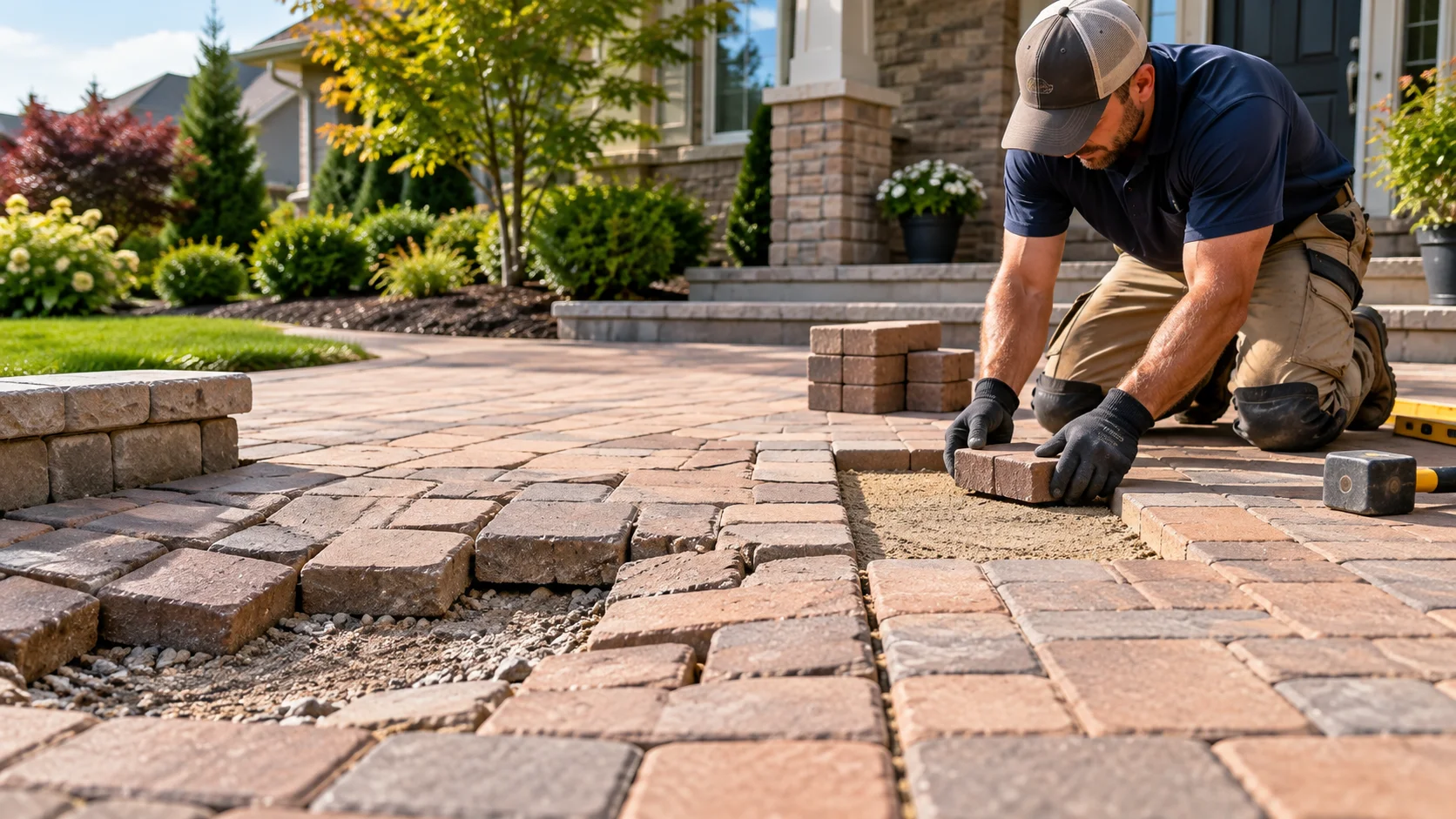
Professional repair often involves removing the affected pavers, rebuilding or regrading the base, compacting the material, and reinstalling the pavers at the correct elevation.
Water and Drainage Problems Can Wash Out the Base
Water is another major reason pavers sink.
When runoff is repeatedly directed toward a patio, driveway, walkway, or retaining area, water can travel beneath the pavers and slowly remove or redistribute the bedding material.
This process can create voids under the surface.
Over time, the pavers above those voids begin to settle.
Drainage problems can also contribute to standing water, erosion, joint sand loss, and premature deterioration throughout the paved area.
Our article on the role of drainage in long-lasting pavers explains why managing water is such an important part of long-term paver performance.
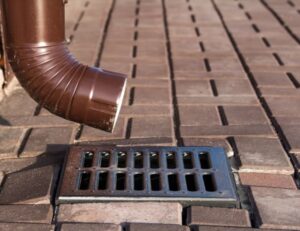
In some situations, correcting the source of excess water may also involve improved drainage solutions such as downspout installation.
Failed Edging Can Allow Pavers to Spread and Drop
The edges of a paver installation help hold the entire system together.
When edge restraints loosen, crack, shift, or separate from the pavement, the outer rows of pavers may begin to move outward. Once that happens, joints can widen and nearby pavers can shift or settle.
This is especially common along:
- Driveway borders
- Walkway edges
- Patio perimeters
- Steps
- Curved sections of hardscape
Replacing damaged restraints can help stabilize the affected area before additional movement occurs.
Amazing Paver provides failed edging replacement as part of restoring damaged paver surfaces.
Missing Joint Sand Can Contribute to Paver Movement
The sand between pavers does more than improve appearance.
Joint sand helps lock neighboring pavers together and supports the interlocking structure of the pavement. When too much sand disappears because of rainfall, pressure washing, runoff, weeds, or normal wear, the pavers may have more room to move.
Movement does not always cause immediate sinking, but it can contribute to instability and make existing base problems worse.
Restoring the joints with proper material can improve stability after repairs are completed. Learn more about our paver joint re-sanding service.
Proper cleaning before re-sanding may also be necessary when joints contain dirt, moss, weeds, or deteriorated material. Our paver cleaning service is designed to prepare paved surfaces for restoration and ongoing maintenance.
How Professional Paver Repair Fixes Sunken Areas
A proper repair should address more than the visible low spot.
Simply adding sand on top of the surface or filling around a sunken paver rarely solves the underlying problem.
Professional paver repair typically involves several steps.
1. Removing the Affected Pavers
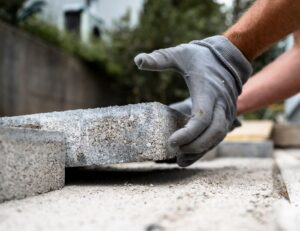
The sunken section is carefully disassembled so the underlying base can be inspected.
One major advantage of interlocking pavers is that individual units can often be removed and reused.
2. Correcting the Base
The damaged or settled base material is replaced, regraded, and compacted.
If drainage contributed to the failure, the grade may also need to be adjusted so water moves away from the repaired area.
3. Reinstalling and Leveling the Pavers
Once the base is stable, the original pavers are reinstalled and aligned with the surrounding surface.
Joints are then restored so the repaired section integrates with the rest of the installation.
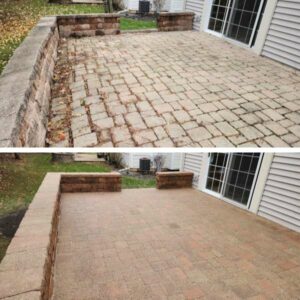
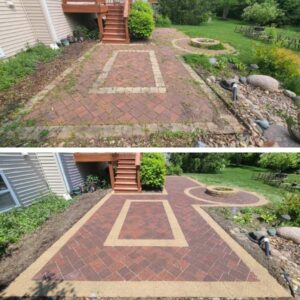
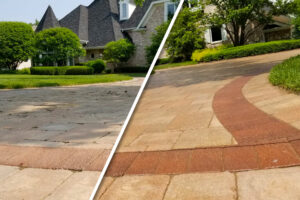
Homeowners can see related examples of completed restoration work in our paver restoration gallery.
For additional information about common restoration issues, visit our guide to common paver problems and how restoration fixes them.
Can Sunken Pavers Usually Be Reused?
In many cases, yes.
If the pavers themselves are structurally sound, they can often be lifted and reinstalled after the base has been repaired.
That is one reason restoration can be more practical than completely replacing an entire patio, walkway, or driveway.
However, individual pavers may need replacement if they are:
- Cracked
- Severely chipped
- Structurally damaged
- Permanently stained
- Missing
- No longer compatible with the surrounding installation
The condition of the base is often more important than the age of the paver itself.
If you are unsure whether an existing surface can be restored, our guide on whether damaged pavers are too far gone to restore covers several factors that can help determine whether repair is realistic.
Preventing Pavers From Sinking Again
Repairing a sunken section is only part of the solution. Preventing the same problem from returning requires correcting the underlying cause.
That may include improving drainage, rebuilding unstable base material, repairing edging, restoring joint sand, or addressing nearby water runoff.
Ongoing maintenance also plays an important role.
Cleaning helps remove organic growth and debris, while proper joint sand and sealing can help protect the paver system from moisture intrusion and surface deterioration.
Homeowners interested in protecting restored surfaces can learn more about paver sealing and whether pavers need to be sealed every year.
If your patio, driveway, walkway, or other paved surface has developed low spots, Amazing Paver can evaluate the problem and determine what is happening beneath the surface. Visit our services page to explore available restoration options.
Key Takeaways
Sunken pavers usually indicate a problem beneath the surface rather than a problem with the paver itself.
Common causes include poor base preparation, soil settlement, water erosion, drainage problems, failed edging, and joint sand loss.
Professional repair typically involves removing the affected pavers, rebuilding and compacting the base, correcting the grade when necessary, and reinstalling the existing pavers.
Addressing the underlying cause is critical. Repairing only the visible low spot without correcting drainage, base failure, or edge movement can allow the problem to return.
With the right restoration approach, many sunken paver